All Categories
Featured
Table of Contents
Offices emptied overnight, and what was implied to be a momentary measure became a seismic shift. Remote work blurred into hybrid models, leaving leaders rushing to specify what "back to typical" even meant. The Fantastic Resignation followed 10s of millions of workers reassessing their concerns, walking away from roles that no longer served them.
Companies reacted with progressive policies, extravagant signing rewards, and culture-driven retention methods. Return to Workplace struck back while rolling layoffs reminded employees that security was never ever ensured and companies aren't households, it's service.
We are now managing a multi-generational workforce with drastically different meanings of success, browsing management difficulties in real time, and rewording the social contract of work as we go, all versus the background of AI and a Wall Street/Shareholder/CEO-driven movement promoting severe efficiency and a "do more with less" required.
Political polarization continues to fracture communities, leaving individuals unsure whom or what to trust. The world order itself has actually shifted. The pandemic exposed the interconnectedness (and fragility) of worldwide systems. Conflicts, supply chain breakdowns, and energy crises have only reinforced this sense of vulnerability. At the same time, AI has actually silently woven itself into our individual lives.
Strategic Planning for Your 2026 AI-Cloud Evolution
Chatbots like ChatGPT aid with whatever from preparing emails to preparing vacations, leaving us at the same time surprised and uneasy. We're adapting to AI without a cumulative conversation about what it implies for identity, creativity, or connection. Inflation, an affordability crisis, and a general sense that post-pandemic life feels "various" even if we can't quite put a finger on why.
The ground beneath us never rather settles, and uncertainty has ended up being a baseline condition we're discovering to live with. Then there's innovation the accelerant in this "no normal" era. The explosion of generative AI in late 2022 seemed like a switch flipping over night. Suddenly, anybody might create images, code, essays, or company plans with a couple of prompts.
This acceleration has fueled a wave of new AI-native companies emerging unicorns like Lovable are reconsidering item design with "ambiance coding" and other AI-enabled approaches. The ecosystems around these tools have developed simply as rapidly. GitHub, as soon as a niche platform for designers, is now the foundation of open-source collaboration, powering AI advancements at scale.
It relocates loops repeating, compounding, and spawning new platforms quicker than businesses and societies can adapt. AI Automation and enhancement are no longer theoretical. They're here, forcing organizations and people alike to ask: what is uniquely ours to do? This quick check out where we've been can help us see where we are going.
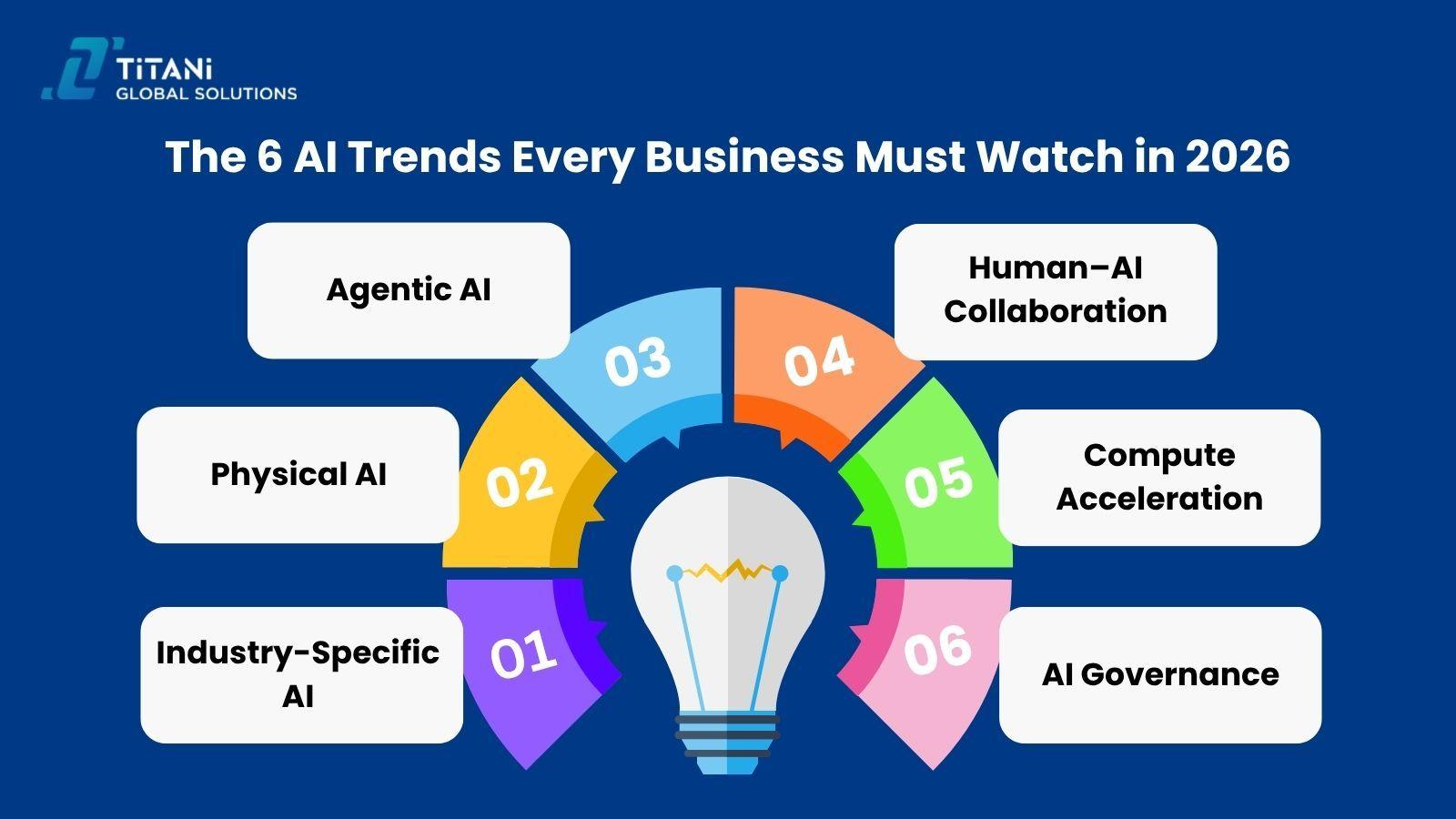
Under the surface area, new patterns have taken shape. If we zoom out, these patterns point towards six shifts currently forming in the near range: Press enter or click to see image completely sizeIn his prompt and groundbreaking book, Academic Ethan Mollick framed the generative AI transformation as "co-intelligence" people and AI working together, each magnifying the other.
How to Design the Scalable AI Deployment Roadmap
The shift over the next 6 years is less philosophical and more behavioral: we start to need AI to operate at work and in everyday life. Right now, that reliance is currently visible in the numbers. Microsoft's most current Future of Work research shows that nearly a third of details workers use generative AI numerous times a week, which Copilot users lean on it for high-complexity tasks at nearly 3 times the rate of traditional search.
And let's not forget human nature. Numerous employees are hiding their use of AI either since of perception or company governance. An Anthropic research study discovered that the majority of workers utilize AI at work, however 69% are actively concealing their usage of it. The pattern looks familiar. We used GPS as a handy tool, then numerous of us forgot how to check out a map.
The work still gets done, however the scaffolding shifts from human memory and ability to a human-AI loop. This "GPS effect" cascades through the coming agent economy: AI not simply as a tool on your desktop, but as a swarm of representatives acting upon your behalf, end to end. Co-intelligence becomes co-dependence as soon as those representatives are wired into everything: your calendar, your CRM, your monetary systems, your kid's school website.
Mastering Your AI-Cloud Landscape in 2026
AI deals with the rest. AI needs human beings to exist, and we need AI to function.
Inside business, AI is starting to sculpt up what used to be full-time jobs into task portfolios., showing that lots of occupations are clusters of AI-addressable tasks rather than indivisible roles.
Synthetic intelligence can do the work presently performed by almost 12% of America's labor force, according to a current from the Massachusetts Institute of Technology. This is where "gray collar" comes in. We currently have this term for individuals who sit between white-collar and blue-collar (ie, nurses, oral assistants, etc). Believe fractional CMOs, contract data researchers, part-time item leaders, gig-based UX teams, and AI-augmented copywriters offering their time in slices to multiple clients.
Historically, pensions were changed by 401(k)s; the next phase replaces job titles with individual operating systems and portable professional credibilities. It is with some irony that many late-stage profession understanding employees (with gray hair) are finding themselves transitioning into gray-collar work after a layoff.
Boomers and Gen Xers who age out, Gen Zers who opt out, and even millennials who stress out are discovering themselves in the gray-collar class, either by option or necessity. Press get in or click to view image completely sizeHigher ed is under pressure from 3 sides: AI in the class, less standard entry-level functions, and an intensifying student financial obligation issue.
Keeping Australian Data Safe Throughout Rapid Cloud MigrationVital Pros of Business Modernization for the Future
About 42.3 million Americans hold federal trainee loan financial obligation, with total federal balances around $1.67 trillion and approximately $1.81 trillion when you include personal loans. At the very same time, policy around payment keeps moving.
That unpredictability only amplifies skepticism from more youthful generations who currently watched older brother or sisters or moms and dads battle under loan problems. Layer AI.

Latest Posts
Essential Steps for a Successful 2026 Digital Shift
Steering Your AI-Cloud Integration for 2026
Expert Tips for Scaling Cloud-Based AI Models