All Categories
Featured
Developing Robust Cloud-Native Systems in 2026
Table of Contents
Wish to discover more about O1, EB1A and EB5? Set up a totally free assessment- Join our community to get first access to roles and referrals - - Follow to stay upgraded on high-skilled immigration, tasks, and tech.
Construct a scalable AI method based on insights from successful IT leaders and business choice makers. In, you'll discover finest practices throughout 5 motorists of success consisting of: Make sure AI projects line up to organization objectives.
Release AI that satisfies security, personal privacy, and regulatory requirements.
In 2026, companies will not ask whether they should adopt AI, however rather how effectively and properly they can embed it into every layer of their company. The idea of enterprise AI adoption is no longer limited to automating a couple of processes; it represents a basic shift in how enterprises think, decide, operate, and grow.
Building Resilient AI-First Strategies
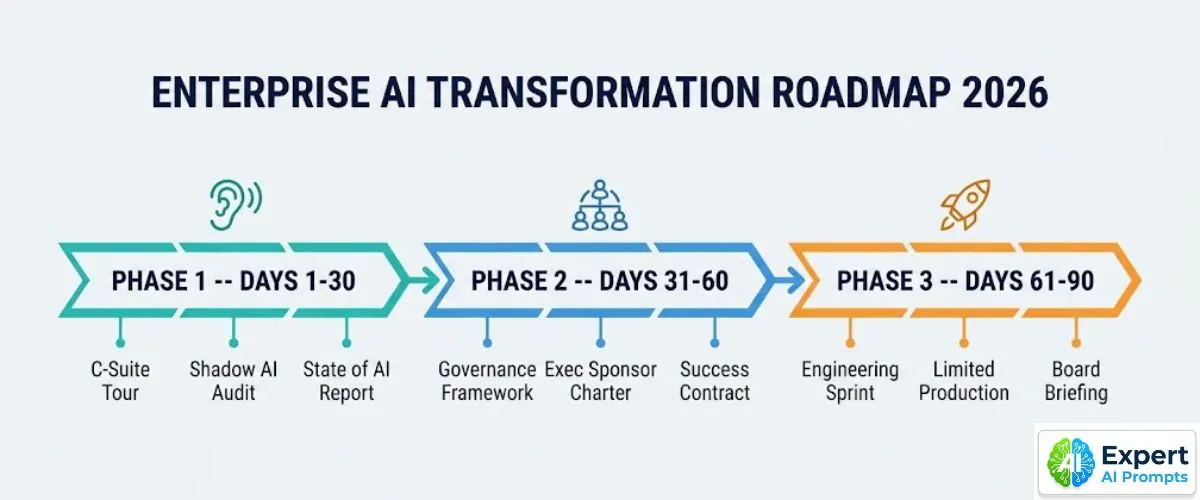
It also explains a complete AI execution technique, presents a scalable AI adoption structure, and lays out tested enterprise AI best practices that organizations must follow to succeed in the next generation of digital company. An AI roadmap 2026 is a structured and positive strategy that defines how an organization will adopt, scale, and govern synthetic intelligence over the next few years.
The importance of an AI roadmap lies in its ability to bring clearness and positioning. Without a roadmap, business typically purchase several detached AI tools that fail to deliver measurable service value. A roadmap, on the other hand, assists leaders recognize priorities, assign resources efficiently, manage threats, and procedure development gradually.
A distinct AI adoption structure offers a structured design for directing enterprises through the complex journey of AI improvement. This framework guarantees that AI adoption is organized, scalable, and sustainable rather than fragmented and reactive. The most reliable AI adoption framework for 2026 includes 6 interconnected phases: tactical alignment, data preparedness, use case design, AI advancement, governance, and scaling.
Forecasting the Next Wave of Australian Facilities PatternsEnterprises continually refine their AI technique based on new data, developing organization objectives, regulatory modifications, and technological improvements. The very first and most vital action in business AI adoption is establishing a clear tactical vision.
In this stage, company leaders should identify how AI supports their long-lasting goals, whether it is enhancing client complete satisfaction, increasing revenue, decreasing operational costs, or boosting risk management. AI efforts ought to be aligned with business strategy, industry positioning, and competitive distinction. Strong executive sponsorship is essential at this phase. AI change requires cultural modification, investment, and cross-department collaboration, which can not be successful without leadership dedication.
Understanding the Intersection of Artificial Intelligence and Cloud Technology
Information is the lifeblood of AI. Without top quality, available, and well-governed data, even the most advanced AI systems will fail.
Enterprises must invest in central data platforms, cloud or hybrid facilities, real-time data pipelines, and strong data governance frameworks. Data personal privacy, security, and compliance with policies such as GDPR and emerging AI laws should likewise be incorporated into the data strategy. This phase ensures that AI systems are developed on trustworthy, ethical, and scalable data foundations.

Not every procedure needs to be automated, and not every problem requires AI. Smart business AI adoption focuses on usage cases that deliver measurable company impact. High-value use cases frequently consist of intelligent automation, predictive analytics, personalized recommendations, scams detection, demand forecasting, and conversational AI. These use cases directly enhance performance, customer experience, and choice quality.
Navigating the Intersection of AI and Digital Technology
This stage involves building, training, and releasing AI models into genuine company environments. It consists of selecting proper maker knowing methods, training designs on business information, testing efficiency, and integrating AI systems with existing applications.
Company leaders should understand how AI reaches decisions to guarantee trust and accountability. Implementation ought to be supported by MLOps practices, which automate model monitoring, re-training, variation control, and efficiency optimization. This makes sure that AI systems remain precise, relevant, and secure with time. As AI becomes more powerful, governance ends up being more important.
An enterprise-level AI governance framework includes clear responsibility structures, ethical guidelines, risk assessment procedures, and human oversight mechanisms. This ensures that AI systems line up with organizational worths, legal requirements, and social expectations. Responsible AI will not be optional. Customers, regulators, and employees will require openness, fairness, and explainability from AI-driven choices.

Latest Posts

Essential Steps for a Successful 2026 Digital Shift

Steering Your AI-Cloud Integration for 2026
Expert Tips for Scaling Cloud-Based AI Models